


Features
Holding a court
How a court gets held
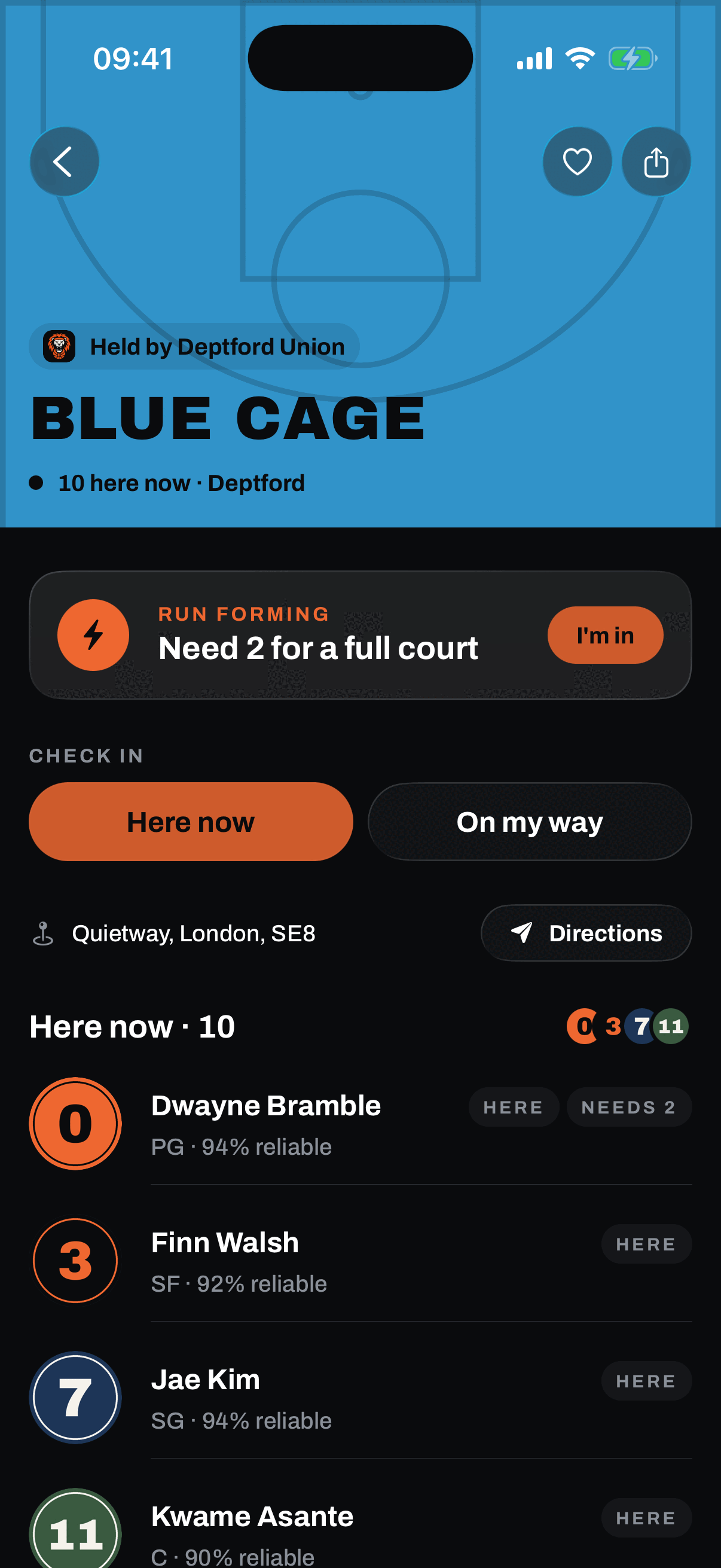
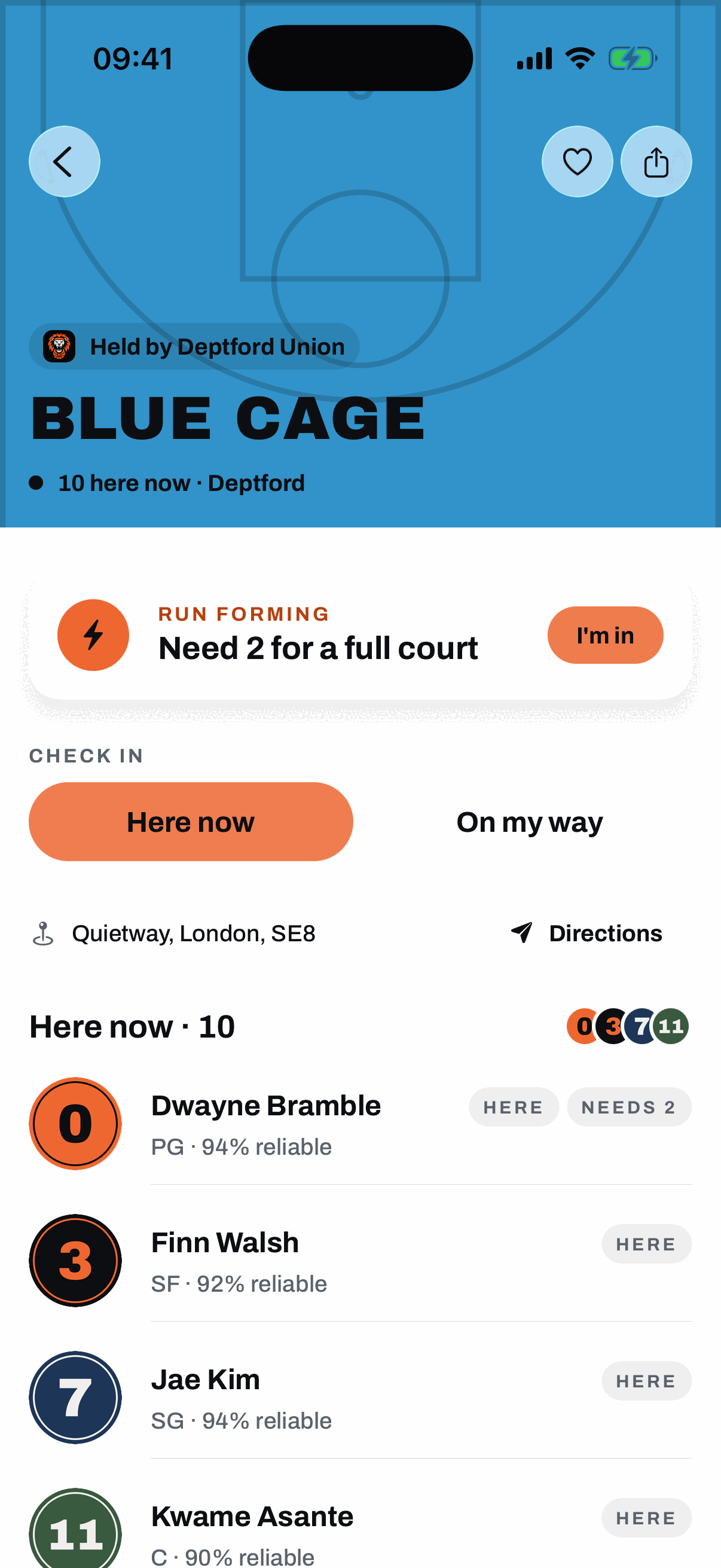
A court changes hands over what happens at that court: win a confirmed game there and the court is yours, flying your element colour on the map and your crest on the court page until someone takes it off you. Win a takeover run and the same thing happens. There is no claiming a court from your bedroom, and no holding one you never play at.
Challenging a holder
See a held court you want? Your captain issues a challenge with a proposed time. Challenges queue first come, first served: each one takes a numbered position, and the front of the queue is the one that counts. One pending challenge per team per court, and a team that fires off challenges all day hits a daily limit, so the queue stays a queue and not a spam folder.
The 48 hour rule
Lost a confirmed game at a court? Your team waits 48 hours before challenging that court again. Try earlier and the app tells you straight: your team lost here recently, wait 48 hours before challenging this court again. Losing teams run it back another day instead of hammering the rematch button, and holders get to actually hold something.
Defending your court
When a challenge lands, the holding captain confirms it, which locks in the game, or declines it. Ignoring it is not a defence: after 72 hours of silence, the team at the front of the queue can claim the court directly, and they have to be checked in at the court to do it. Showed up for a confirmed game and the other team never came? Once the scheduled time has passed you can claim the win as a forfeit, again only while checked in at the court. Every path to taking a court runs through actually standing on it.
And when the queue piles up, a holder does not have to answer challenges one at a time. Put the court on the line with a takeover: a winner-stays gauntlet on your court where your team defends last, and whoever comes out champion holds the court.
Confirming results, and disputes
Games settle captain to captain. Each side calls the winner for their own side, the call is final once sent, and the court only moves when both calls name the same team. If the two calls clash, the game is disputed: it settles nothing, it never moves the court, and it stays visible so both captains can put it right. A court cannot change hands without both sides agreeing on what happened.
The ladder
Every team's record feeds the ladder: ranked by wins, then win rate, then current streak, with courts held shown right on the row. There is no separate points system to game. The ladder is nothing but confirmed games and held courts, which is exactly why the top of it means something.
Try it yourself.
GotNext is live on the App Store now, free. On Android, testing is open and invites go out in batches.
On Android? Become a founding tester
iPhone hoopers can download GotNext today. Android testers get Play invites in batches.